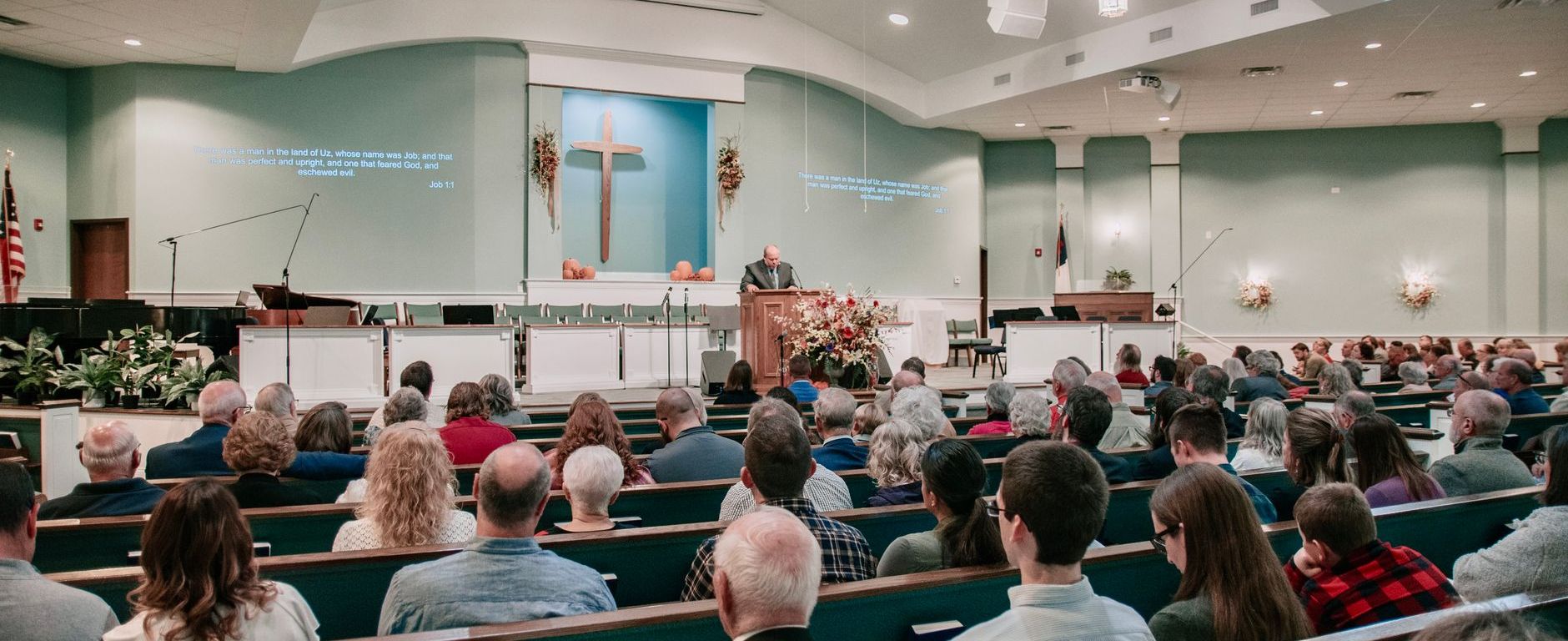
Sermon “listening” is a subject that doesn’t get much press. We know about the pastor’s responsibility to preach biblical and engaging sermons (2 Tim 4:2), but how often have you heard about a listener’s responsibility in the process?
For those who have a high view of corporate worship and value the Lord’s Day, you will no doubt see the critical importance of sermon listening. You are not simply a spectator, much the same as when you go to the theatre to watch a film. Rather, you are a participant in the great act of worshipping the Triune God, the One who alone is worthy of our praise. Yes, the preacher stands accountable before God for his pulpit ministry, but so too those in the pews (Heb 13:17).
Off the bat, it is important to note that you need to be in church, consistently. “And let us consider how to stir up one another to love and good works, not neglecting to meet together, as is the habit of some, but encouraging one another” (Heb 10:24-25). The casual and passive view that has infected the evangelical church in recent years – “I’ll go to church when it’s convenient for me” – needs to be dumped.
Believer, you need to be in church, week after week. And if you’re not in church, it better be for a good reason. When you go, there should be a great desire and expectation to hear from God (Psalm 115:1).
There are different places we could turn for help in improving sermon listening skills, but I want to look at the Westminster Larger Catechism, which helps believers better understand Christian doctrine and what the Bible teaches. Question 160 asks: what is required of those that hear the Word preached? Answer: Listeners must approach the preached Word with diligence, preparation, and prayer, evaluating the sermon against the Scriptures. Believers should receive the truth with faith, love, meekness, and readiness of mind, as the Word of God. Listeners should meditate on it, discuss it, hide it in their hearts, and apply its teaching to their daily lives. (my paraphrase)
The short answer to the question – what is required of those that hear the Word preached? – is obviously, a lot! I don’t intend to unpack everything in that answer, but in what follows, I will offer a few tips to improve your sermon listening skills.
In Advance
- Strive to get a good night’s sleep before church. Realize that Sunday morning starts Saturday night. Don’t be up late watching movies, or something of the like.
- Aim to arrive at worship well in advance of the service start time. I’ve heard of married couples getting into fights on the way to church. Why? Because they didn’t give themselves enough time to get ready. If we can regularly get to work at 8:00 and get the kids off to school early, why is it so hard to get to church at 10:00?
- Make sure you are prayed up. Pray for your pastor, yourself, your children if you have them, your fellow church members, etc.
- Be quiet right before service starts.
During Worship
- Try to free yourself from distractions. Sit at the front of the sanctuary if you tend to look at everyone else, rather than the preacher.
- Take notes. This will help you be more engaged and retain what you have learned.
- Continue to pray for both yourself and the preacher.
- Receive God’s word. The apostle Paul was elated at how the Thessalonian believers responded to the Word. “And we also thank God constantly for this, that when you received the Word of God, which you heard from us, you accepted it not as the word of men, but as what it really is, the Word of God, which is at work in you believers” (1 Thess 2:13-14).
After the Service
- Meditate on the sermon passage (and other Scripture readings from the service).
- Continue to pray, asking the Holy Spirit to give you understanding through Scripture.
- Test what you have heard. The Berean believers are a great model. “Now these Jews were more noble than those in Thessalonica; they received the Word with all eagerness, examining the Scriptures daily to see if these things were so” (Acts 17:11).
- Aim for obedience and application. “But be doers of the Word, and not hearers only, deceiving yourselves” (James 1:22).
- If you feel inclined, thank the pastor for his preaching ministry. Ask a follow up or clarifying question. If you have concerns, state them in a respectful way, opening the way for dialogue. For example, you could say, “Did I hear you right? Is this really what you were saying?”
It is a great gift to hear God’s Word preached. His Word is our very life (Deut 32:46-47). We are not in the dark, and God intends for His Word resound and be proclaimed the world over. Both preacher and listener are accountable before Almighty God (Ezekiel 2-3). Don’t take this lightly.

