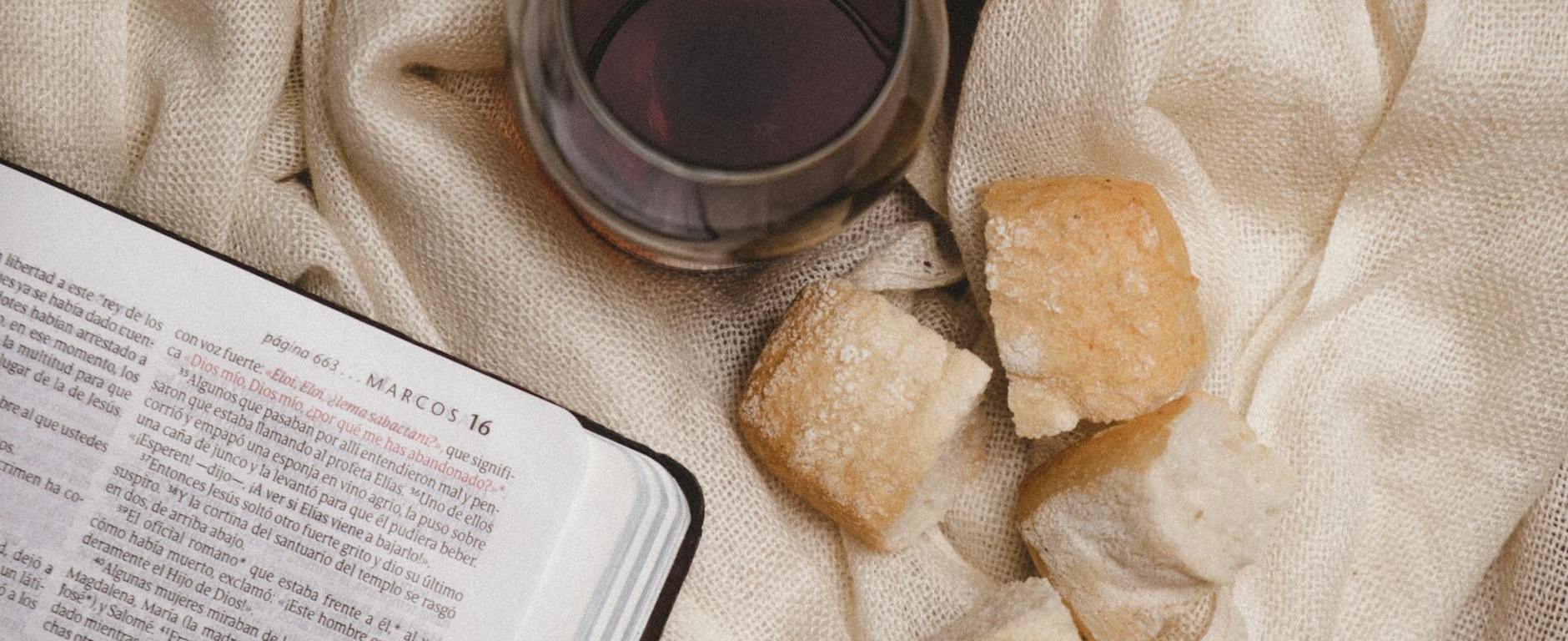
Our world is full of traditions. Some are common, like celebrating birthdays and anniversaries, and others more personal or cultural. As Christians, we’re part of the family of God, and one of the most important traditions He gave us is the Lord’s Supper.
This sacred meal must never become a mere ritual. To appreciate it rightly, we need to understand its meaning power, and the privilege of participating.
Christ Commissioned the Supper
We observe the Lord’s Supper because Jesus instituted it on the night before His death. Along with Baptism, it is one of the Church’s two sacraments. Baptism is a one-time sign of entrance into the covenant family of God. The Lord’s Supper, on the other hand, is ongoing—a continual reminder of Christ’s death and our fellowship with Him.
John Calvin called a sacrament “an outward sign by which the Lord assures us inwardly of his loving promises.” In other words, a sacrament is a visible form of invisible grace.
The Westminster Shorter Catechism defines it this way:
Q. 92. What is a sacrament?
A. A sacrament is a holy ordinance instituted by Christ; wherein, by sensible signs, Christ and the benefits of the new covenant are represented, sealed, and applied to believers.
J.I. Packer observed that the Lord’s Supper carries meaning on three levels: past, present, and future.
“It has a past reference to Christ’s death, which we remember. It has a present reference to our corporate feeding upon him by faith. And it has a future reference as we look ahead to Christ’s return.” (Concise Theology, p. 219)
In this single ordinance, Christ reorients our hearts across time—back to the cross, into present communion, and forward to His return.
A Memorial of Christ’s Sacrifice
In 1 Corinthians 11:24–25, the apostle Paul quotes Jesus:
“This is my body, which is for you. Do this in remembrance of me… This cup is the new covenant in my blood. Do this… in remembrance of me.”
Two elements are involved—bread and cup—representing Christ’s body and blood. Every time we partake, we remember Christ’s death and its benefits. Verse 26 says, “For as often as you eat this bread and drink the cup, you proclaim the Lord’s death until he comes.”
We are a forgetful people. Scripture regularly calls us to remember, especially the most important truths. The Supper memorializes what God did through Christ—His body broken, His shed blood, and His resurrection from the dead. These physical elements in our hands remind us of the gospel in the most tangible way.
Jesus declared in John 6:35, “I am the bread of life. Whoever comes to me shall not hunger, and whoever believes in me shall never thirst.” He is our sustenance. In John 14:6, He adds, “I am the way, and the truth, and the life. No one comes to the Father except through me.”
Only the Son of God could make such a claim. Jesus is life. And the Supper reminds us we’ve received that life through His death.
The New Covenant in His Blood
Jesus said, “This cup is the new covenant in my blood.” These words echoed centuries of prophetic anticipation. The Old Testament foretold a new covenant—a covenant that would bring forgiveness and new hearts (see Jeremiah 31, Ezekiel 36).
Just as the first covenant was ratified with blood (often through animal sacrifice), the new covenant was sealed by the blood of God’s Son. In context, Jesus was celebrating the Passover—commemorating Israel’s deliverance from slavery in Egypt, when God “passed over” their homes marked by lamb’s blood. But now, Jesus points to a greater deliverance—salvation through His own blood.
Peter explains:
“You were not redeemed with perishable things… but with the precious blood of Christ, as of a lamb without blemish and without spot.” (1 Peter 1:18–19)
The book of Hebrews adds:
“Christ entered the Most Holy Place once for all by His own blood, thus obtaining eternal redemption.” (Hebrews 9:12) “We have confidence to enter the Most Holy Place by the blood of Jesus.” (Hebrews 10:19)
The new covenant gives us assurance, forgiveness, and access to God Himself.
Communion with Christ
The Supper is not only about remembering—it’s about receiving. As we partake, we spiritually commune with the risen Christ. Through the power of the Holy Spirit, Jesus is truly present—not physically, but spiritually.
Once again, I draw from the Shorter Catechism:
Q. 96. What is the Lord’s Supper?
A. The Lord’s Supper is a sacrament, wherein, by giving and receiving bread and wine… the worthy receivers are, not after a corporal and carnal manner, but by faith, made partakers of His body and blood, with all His benefits, to their spiritual nourishment and growth in grace.
In the Supper, our souls are nourished just as our bodies are fed by food and drink. It’s a means of grace, strengthening our faith.
Jesus said in John 6:53–57:
“Unless you eat the flesh of the Son of Man and drink His blood, you have no life in you… He who eats My flesh and drinks My blood abides in Me, and I in him… he who feeds on Me will live because of Me.”
These words remind us of the depth of communion we are offered. We don’t just remember Christ—we receive Him by faith. He abides in us, and we in Him.
Participation in the Body
Paul wrote in 1 Corinthians 10:16:
“Is not the cup of thanksgiving a participation in the blood of Christ? Is not the bread that we break a participation in the body of Christ?”
The Lord’s Supper isn’t merely symbolic. It’s a real, spiritual participation in Christ. The Holy Spirit unites us to the living Christ and to one another. It is the deepest form of fellowship.
This “present” aspect of the Supper reminds us that Jesus is not distant. Though He is in heaven, He draws near at the Table. We come hungry, and He nourishes our souls.
A Foretaste of the Future
The Lord’s Supper also points us to the future. As Paul said in 1 Corinthians 11:26:
“You proclaim the Lord’s death until He comes.”
Every time we partake, we are saying: Jesus is coming again.
This meal foreshadows the great feast yet to come—the Marriage Supper of the Lamb (Revelation 19:6–9). On that day, all of God’s people will dine with the King. Jesus said, “I will not drink again of the fruit of the vine until that day when I drink it new with you in my Father’s kingdom.” (Matthew 26:29)
Until then, every communion meal points us forward. We proclaim His death, but we also proclaim His return.
The Lord’s Supper reminds us that God’s redemptive plan isn’t finished. Christ will return. Justice will be done. Sin and death will be no more. And we will feast with our Savior in glory.
Not Just Ritual—But Obedience
To be clear, the Lord’s Supper doesn’t save anyone. Christ alone saves. Yet He instituted this sacrament, and we participate in obedience to Him. When rightly approached—with faith and repentance—it is a means of great blessing.
May we never take the Table for granted. It is a gift. Christ’s body, given for you. His blood, shed for you. Every time we gather, we proclaim the gospel and nourish our souls.
 Shepherd the Flock