
By Mitch Schultz and Daniel Stegeman
At first glance, the teaching of Dr. Rob Reimer, president of Renewal Ministries, might appear to be on track. It offers little snippets of Scripture here and there. Many would argue that people are being helped and experiencing deliverance. What’s not to like? But upon closer examination, it has clearly deviated from our bearing, the truth of Scripture. And not just by a degree or two, but by a wide margin, and in such a way that the teaching of Rob Reimer can be classified as dangerous.
What is Soul Care?
While Reimer has written several books, by far his most popular is Soul Care, published in 2016. We will draw from other sources, but this critique will focus primarily on the teaching of Soul Care. (For a comprehensive analysis of this subject, check out the work of Fruitful Vine Ministry here.)
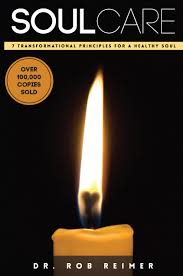
Reimer writes, “I believe Soul Care is going to be the gateway to evangelism in this generation. I think people are going to come to faith in Christ today more because they know they are broken and in need of a healer than because they know they are sinners in need of a Savior.” (pg.249, SOUL CARE) This audacious statement is telling because it suggests Reimer thinks he has found something new and innovative – something that previous generations have glossed over.
Through his talks and writings, Reimer emphasizes “woundedness” over “sinfulness.” He speaks of the remedy of “inner healing” far more than the power of Christ’s gospel. He posits that man’s problem is essentially emotional or psychological.If I am struggling with an addiction to porn, for example, my problem is likely that I’ve been wounded in my life.
So how do I heal from this wound? According to Reimer, this healing comes through deliverance and through a supernatural appearing of God the Holy Spirit to validate the healing. This is best validated through some kind of spectacular experience. Help comes from the outside because the problem is not really with my heart and my sin nature. The problem, rather, is that I am possessed by something else.
From his books and various talks, you rarely hear (if at all) Reimer speak of our sinful condition, the need for confession and repentance, and accepting God’s forgiveness through the redemptive work of Christ. While his Soul Care book does include a chapter on repentance, it fails to uncover the true nature of repentance. Reimer’s treatment of the subject is often more psychological than biblical.
In Soul Care, the Bible is always on the margins. Reimer’s teachings are highly testimonial where personal anecdotes often serve as the basis for his theology. Even though spiritual warfare is a huge theme in Reimer’s ministry, rarely (if ever) does he teach on passages like the armor of God (Eph 6:10-18). While countless articles, chapters, and even books have covered the armor of God, you would be hard pressed to find it in Reimer’s teaching. Nor does the account of Jesus’ temptation (Matt 4:1-11) find much emphasis in his teaching. Each time he was tempted, Jesus used the sword of the Spirit (the Word of God) to ward off the devil. The model that our Lord left for us when it comes to temptation and spiritual warfare is hugely instructive, but it is ignored in the Soul Care program.
In many of his talks, Reimer relates how he came to personal faith in Jesus by receiving a vision where Jesus personally and visibly appeared and spoke audibly to him. It makes sense then that the trajectory of Reimer’s understanding and emphasis on living out the Christian life requires sensational and supernatural experiences. It’s how his journey of faith started.
Suitcase Theology
According to their website, Soul Care is “a process of getting “unstuck” by cleaning out old hurts, sins, bitterness and secrets to make room for joy, peace, freedom and fullness.” Reimer states, “Brokenness grasps for the soul of humanity. We are broken body, soul, and spirit, and we need the healing touch of Jesus.” Soul Care explores seven principles that are profound healing tools of God: securing your identity, repentance, breaking family sin patterns, forgiving others, healing wounds, overcoming fears, and deliverance.
Riemer often uses the analogy of the soul being like a suitcase. He writes, “Soul Care is about cleaning out your soul from the messiness of life using Biblical principles. Our soul is like a suitcase, and if it is full of things like bitterness, lies, and secrets, then there is not much room for the good things God wants to give life, peace, joy and fullness.”
This is the foundation for virtually all his talks and leads predictably to the need for deliverance or rescue by a spectacular intervention of the Holy Spirit. Reimer does more than imply that Christians can have demons; he assumes it. He writes, “I do believe Christians can be afflicted with various degrees of demonization, and I think in some cases the only way to get them free is through deliverance or a power encounter. Therefore, in short, I do believe Christians can have indwelling demons and need deliverance.” (Soul Care, 210)
Reimer has said before that he estimates as many as 30-40% of Christians have demons. While there is certainly debate within the Christian community as whether this position is tenable, what is deeply troubling is how little Scripture Reimer uses to back up his position, especially given its controversial nature. (See Mark Barnard’s paper addressing the validity of Reimer’s arguments). One would think that if a Christian ministry is rooted and founded upon a controversial interpretation, its proponents would take pains to biblically defend their position. However, Reimer’s posture is more, “I’m the expert, just take my word for it.”
Our problem when we struggle in life, he indicates, is because our souls are stuffed with too many unhealthy things, not because we are sinful people by nature who carry in these bodies the effects of sin. Reimer teaches that these compartments in the soul become a dwelling place for demons that somehow cohabit with the Holy Spirit in the believer’s life.
While it is true that Satan tempts, afflicts and oppresses both believer and unbeliever alike, there is no biblical evidence anywhere that he “possesses” Christians. To this Reimer would agree. He writes, “I do not use the word ‘demon possession.’ That implies ownership and Christians cannot be owned” (Soul Care, 210). This begs the question, is there any difference between “demon possession” and Christians having “indwelling demons”? It would appear as though Reimer is engaging in semantics in order to make his controversial position just a little more palatable. If demons are “dwelling” in the soul of a believer, that equates to living within the soul of a believer. And if demons (the forces of Satan) indwell Christians, how can they coexist with the Holy Spirit?
The Bible clearly states that the believer’s body is a temple of the Holy Spirit” (1 Cor 6:19). And where God dwells and claims ownership, the devil will forever remain an outsider. As Jesus noted, “Every kingdom divided against itself is laid waste, and a divided household falls. And if Satan also is divided against himself, how will his kingdom stand?” (Luke 11:17-18). Indeed, the protection that God offers is a great comfort to the believer. Speaking of the person who has been born of God, the apostle John emphatically states, “the evil one does not touch him” (1 John 5:18).
POWER, PRESENCE & PROCLAMATION
According to Reimer, for people to turn to Jesus, they must see God’s power first, not simply hear a message that explains the Gospel, that story of the life, death, and resurrection of Jesus and His subsequent call to repentance. Reimer writes the following that reveals his “suitcase theology”:
“In a pluralistic, syncretistic society, where all deities are considered equal, only the unequal display of Jesus’ power will convince people of the supremacy of Christ. We will not convince people of the Gospel as readily with words only in this day and age. We will not argue people into the Kingdom. People must see to believe. We must demonstrate Jesus’ power like the early church did in Acts.”
Don’t miss that. “People must see to believe. We must demonstrate Jesus’ power like the early church did in Acts.”
In contrast, Jesus warns that even given the most convincing evidence will not be enough for the hardened sinner (Luke 16:30-31). The danger with this push to manifest the power of the Holy Spirit is that it can lead to disappointment when there is no clear demonstration of power to validate the message. The Bible says, “we walk by faith and not by sight” (2 Cor 5:7). Reimer’s program and teaching emphasis naturally lead to a diminished emphasis on faith and trusting in the finished work of Christ.
Reimer also implies that simply preaching the Gospel (words only) rarely works in our postmodern world.
“The Kingdom is a message that must be accompanied with power. Power to change lives. Power to forgive sin. Power to heal the sick. Power to cast out demons. The Kingdom of God is the reversal of everything that went wrong when sin entered the world. It is the dismantling of Hell. This is Kingdom normal. This must become church normal once again. We are living far beneath our King’s intention and our Kingdom potential when we preach words without a demonstration of power. It is becoming more important than ever as we shift from modernism to postmodernism.” (See source here.)
But yet, there is great power in the gospel message alone (Rom 1:16-17). The cross is the only necessary display of power to validate our witness. Yes, “words only” are enough, as the Holy Spirit powerfully convicts sinners and powerfully empowers his people to share the glorious message of the Gospel.
Greater Works?
John 14:12-14 says,“Truly, truly, I say to you, whoever believes in me will also do the works that I do; and greater works than these will he do, because I am going to the Father. Whatever you ask in my name, this I will do, that the Father may be glorified in the Son. If you ask me anything in my name, I will do it.”
How we interpret this verse determines the direction of much of our missiology. We can understand these greater things to mean that what Jesus did in saving people, in bringing new life will exponentially increase as the Gospel spreads across the world. Or, these greater things (John 14:12-14) can mean literally that what Jesus did in signs and wonders ought to be done in greater magnitude through us today, even greater than what Jesus did. Raising the dead. Walking on water. Healing the sick. Giving sight to the blind. Restoring limbs. Etc. This is the position of Rob Reimer.
We have yet to see any of these happen, even though we have witnessed dozens of people come to faith in Jesus by simply embracing the message of the Gospel. Once you start with the presupposition that we will do more miracles and expect far greater movements of power than He did, you have to be committed to this. Your teaching will reflect this core commitment. Again, we see this in Rob Reimer’s teaching.
Demonstrating Jesus’ Power?
We are concerned by the notion that we are the ones who are somehow responsible to move God in such a way that He will display that power. Earlier, we quoted Reimer as saying, “We must demonstrate Jesus’ power.” His creatures, Reimer suggests, are somehow expected to get HIM, the Creator, to do more for us than what we are seeing. In other words, it’s up to us to demonstrate the Spirit’s power. God is at our beckoning. The responsibility of God to move in power is up to us and dependent on our faith. And yet Jesus said in John 3:8? “The wind blows where it wishes, and you hear its sound, but you do not know where it comes from or where it goes. So it is with everyone who is born of the Spirit.”
It must be asked, how do I, a sinner, get God to do what He’s apparently not been doing? Doesn’t that put the onus on me? Does this not make me a small “god” of sorts? Reimer and others will say that yes, in a sense, we are responsible. In his book, Deep Faith, it is essentially Reimer’s thesis that it is by having a right kind of faith, a deep faith, that these greater things that actually happened to Jesus will happen for us. “He dwells in us, and when we walk in the fullness of the Spirit, we can do the things that Jesus has been doing” (Deep Faith, p.7).
We must be careful that we don’t solely rely upon the descriptive texts of the Gospels and Acts to form our theology, or our presuppositions about mission and the Gospel. When Reimer and others urge that people will not come to Jesus unless they see dynamic signs and wonders, they not only commit themselves to assume that as a constant expectation, it also places a burden on others. They end up believing that to be effective witnesses, they need to do more than to just share the Gospel. In some cases, the message of the gospel is substituted for extraordinary manifestation. As a result of this, many who have come under Reimer’s influence have confessed that they feel like spiritual failures.
In many ways, Soul Care presents a new variant of an ancient heresy – Gnosticism. In both subtle and unsubtle ways, Reimer sets himself on a plain above his audience as someone who has reached the spiritual summit. He has the knowledge and insight that believers have been missing and that promises healing and deliverance for those who follow his program. Upon further analysis, however, it is his program. Soul Care deviates from the truth of Scripture and the simple gospel of grace in countless ways. For Rob Reimer, the Scriptures are not sufficient.
In the end, it is our simple faith-response to the gospel that saves us and allows us to persevere in the faith. “Then they said to him, “What must we do, to be doing the works of God?” Jesus answered them, “This is the work of God, that you believe in him whom he has sent.” (John 6:28-29). While our natural impulse is to try to “do more for God” and to look for quick-fix solutions when we have a problem, the consistent witness of Scripture is that we must keep our eyes firmly fixed upon Jesus, the founder and perfecter of our faith (Heb 12:2). As the great hymn says, “It is enough that Jesus died and that he died for me.”
For a comprehensive analysis of this subject, check out the work of Fruitful Vine Ministry here.
 Shepherd the Flock
Great article. I know Reimer personally. He was a pastor of a church we used to belong to. He had a very dynamic and charismatic personality and people just flocked to him. Even back in the days that I knew him and would listen to him preach, he hinted at a lot of this. But hopefully you and others like you can point out the error of his teachings and help people understand the need to know God’s word and not just rely on the teachings of a pastor.
LikeLike
Thanks so much Louis!
LikeLike
Rob has a deep understanding of the human condition, our sinful nature, the wounds it causes to ourselves and others and the resurrection power of Jesus to save, heal and restore us. His books and conferences deal with revival, not at a surface level, but in a way of being transformed by the renewing of the mind. I am very grateful for his work and the healing and deepening of my relationship with and submission to Jesus that have come about as I studied his books and put into practice principles of forgiveness, identity, etc.
LikeLike
Thanks for your comment Jill. Obviously, we disagree. At best Rob has a pseudo- understanding of psychology but it is detached from biblical theology. Rob fits the classic mold of a false teacher and has led many astray. We would urge you to look at the other resources we have produced on Soul Care.
LikeLike