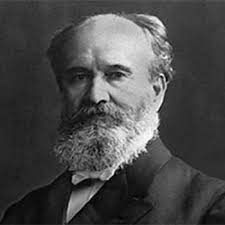
President John Stumbo has argued that following General Council 2023, the C&MA is “more Simpsonian than ever.” These comments come in the wake of a Council decision allowing for women’s ordination.
But is this true? Does the C&MA of 2023 look more like the early Alliance that was built and shaped by founder A.B. Simpson? Obviously in attempting to answer this question, it would be helpful to look at Simpson’s teaching on the matter. Though he didn’t touch on the subject often, there are some relevant passages that give us a clear picture of Simpson’s beliefs. Permit me to quote at length from two of his teachings.
The first is from a March 1891 edition of The Christian Alliance:
“Ever since Anna announced the incarnation, and Mary Magdalene heralded the resurrection, woman has been God’s special instrument for publishing the glad tidings of salvation. We may regulate, but can never suppress her ministry. The best remedy for the abuse of anything is its wise and proper use. The Scriptures have regulated woman’s ministry. The head of every woman is the man, the head of every man is Christ, the head of Christ is God. This is the Scriptural order of the sexes; but this does not authorize the exclusion of woman from public work for the Lord. It seems to me that the New Testament prohibits woman from the formal and official ministry of the Christian church in the strictly ecclesiastical sense. She is not called to be a pastor, an elder, a bishop; but besides the official ministry and government of the Christian church there is an infinite room, for proclaiming a glad message of salvation. To woman is given the prophetic ministry undoubtedly, and the prophetic ministry is nothing less than this, ” But he that prophesieth speaketh unto men to edification, and exhortation, and comfort.” Any word, therefore, of edification and exhortation is proper for a woman to speak in the Christian assembly, and anything the apostle may have said subsequently to this statement can never rescind or abrogate these admissions and permissions. The less formal her testimony is, the better. The more it takes the form of a simple story of love, the less like a sermon and the more like a conversation, the more effective it will be. The more it is attended by the spirit of feminine modesty, the more power it will have. There are two terms in the New Testament for preaching. The one is the Greek meaning to proclaim officially with a trumpet (Kerago), the other is the word meaning to talk (Laleo). This latter word describes the ministry of woman, the former the ministry of man. Man is the official herald, woman is the echo of his voice, repeating it in a thousand gentler tones, until love bears it to every human heart. While we place these gentle restrictions around the ministry of woman, as the Bible seems to teach, we do not say that they limit her work a single iota in any really practical and womanly way. We thank God for her precious ministry, and we pray God to raise up more and more of His daughters to proclaim abroad in their sweeter and gentler way the Father’s love. The Lord Himself gave the Word, great was the company of women that published it. May the Lord speedily fulfill this, the true version of the grand old Psalm.”
In this editorial, Simpson is overwhelmingly open and positive towards the ministry of women, as long it is within the bounds of Scripture. Thus, he states that a woman is not rightly to be called “pastor, elder, or bishop.” Also note that Simpson did not make any distinction between “pastor” and “elder.” I only highlight that point because Council 2023 voted to allow for women pastors, but restrict eldership to men, and thus separate the two offices. Scripture makes no such distinction (Acts 20:17, 28, 1 Peter 5:1-2, Titus 1:5, 7) and neither did Simpson.
The second quotation comes from Simpson’s commentary on Romans 16 of his “Christ in the Bible” series:
“There is no doubt that the apostle (Paul) limits woman’s sphere in the Church of God; but only within the restraints required by her nature and her distinct place in the social economy. Like a great river which when it flows within its channels is a blessing, but when it overflows its banks it becomes a desolation, so woman can only reach her highest mission when she moves in her true sphere.
In the First Epistle to the Corinthians (chapter 12), Paul gives her the right to prophesy, and he tells us that prophesying means to “speak . . . for . . . strengthening, encouragement and comfort.” (1 Corinthians 14:3). This includes about all that any Christian woman ever wants to say. The only limitation there required is, that she shall have her head covered, which is a symbol of modesty.
The woman, therefore, who will keep in the modest place that both nature and the Bible require, may speak about anything that is unto “strengthening, encouragement and comfort.” Later he seems to limit this by requiring the women to “remain silent in the churches” (14:34). In another passage he adds, “I do not permit a woman to teach or to have authority over a man; . . . For Adam was formed first, then Eve” (1 Timothy 2:2-13).
It is quite certain that the apostle placed women under certain limitations. We believe that these had only to do with the exercise of authority in the churches. God did not mean woman to rule, but to love, suffer, and help. Her heart, and not her head, should be put in the ascendant. Her yieldedness is strength; her gentleness is her scepter. She is not called to exercise ecclesiastical authority, or take her place in the ordained ministry and government of the church; but in the ministry of testimony and teaching, both in public and in private, and in every office of holy love consistent with the principles of Christianity, she has boundless right and freedom.
There was one special ecclesiastical office given to women in the early church, and it is beginning to be revived in our own time. It is the office of deaconess. This was the position of Phoebe, first mentioned in this passage (Romans 16:1). The word “servant” here means, literally, deaconess.
The office of deaconess was very much the same as that of our city and foreign missionary. It was to teach, testify, and especially to minister to the sick and suffering in the primitive churches. It was recognized then as distinctively as the office of deacon, elder, or bishop; and while it gave woman no ecclesiastical authority, yet it recognized her proper ministry in an official way, and opened the widest doors of usefulness.”
Simpson’s teaching here is in accord with the previous quotation. He does not feel a woman should “exercise ecclesiastical authority or take her place in the ordained ministry and government of the church.” Given that the first quotation came during a time in the middle part of Simpson’s ministry and the early days of the C&MA, while second quotation came towards the end of his life and ministry, it cannot be argued that Simpson’s views changed. He was consistent.
Scripture is our sole rule for faith and practice. I have explored this matter through a study of 1 Timothy 2:9-15. This is our foundational conviction, but we can all agree that the beliefs of A.B. Simpson, the denominations founder, carry great weight. This is why during the “national conversation” many who were pushing for the ordination of women often appealed to Simpson. However, they were either ignorant of his views or chose to selectively ignore them.
Christianity Today has reported on churches leaving the C&MA. The Alliance Bible Fellowship in Boone, NC is one such example. As senior pastor Scott Andrews explained, “It is not we who have changed, it the C&MA which has changed. I’ve said it this way – we have not left the C&MA, the C&MA has left us.”
Is the C&MA “more Simpsonian that ever”? Having explored these key texts and the plain statements that are expressed, the answer is, no. The recent Council decisions mark a departure away from, and not towards Simpson’s vision for women in ministry.
 Shepherd the Flock